
A Travelogue on Jerusalem – Part 1
How to shop from a bus, why Jews pay a fortune to be buried on the Mount of Olives, and why the eastern gate of the Old City was walled up by a Turkish sultan —read about this and other interesting facts in this first part of the travelogue on Jerusalem, part of the travelogue series “Israel—The Land of God.”
YOU CAN FIND MORE INFORMATION ABOUT ISRAEL AND A WHOLE SERIES OF TRAVELOGUES ABOUT ISRAEL HERE
TO THE PREVIOUS TRAVELOGUE –> TEL AVIV, JAFFA, AND BETHLEHEM
Sometimes there are traffic jams at the Israeli-Palestinian border, and that’s actually the best time to go shopping. What do I mean? Well, it’s very simple—along the border walls, there are Palestinian vendors selling all kinds of souvenirs, scarves (supposedly cashmere), dates, stuffed camel toys, and more. These vendors are just waiting for a big, shiny bus full of tourists—like ours—to show up, and they swarm it with all kinds of offers. They shove their goods through the driver’s window, and then the process of bringing more goods inside and taking cash out begins. Lots of shouting, lots of laughter, a big adventure…
History of Jerusalem
Jerusalem has a history spanning more than 4,500 years. The earliest records indicate that the city was originally called Salem (Genesis 14:18) and later Jebus (Judges 19:10) Later, the city was conquered by King Nebuchadnezzar (in 605 B.C.), by Alexander the Great (in 332 B.C.), and by the Roman Empire (in 63 B.C.). The city was completely destroyed in 70 A.D. by Emperor Titus.
Events that took place on the Temple Mount, formerly known as Mount Moriah. Abraham was originally sent there to sacrifice his son; later, at that very spot, King Solomon built the First Temple in 967 B.C.; then Zerubbabel rebuilt it and constructed the Second Temple (in 537 B.C.); and today the Al-Aqsa Mosque, built in 691, stands on this site. The mosque is also called the “Dome of the Rock” because Muhammad’s followers believe that this is the very spot where the rock from which he “leapt” with his horse and ascended to heaven is located. Currently, the land beneath the mosque is owned by Jordan. Yes, you read that correctly—neither Israel nor Palestine, but Jordan.
An interesting video showing the entire history of Jerusalem, from the first settlers to the present day. Watch it HERE.


Geography of Jerusalem
The Kidron, Enom, and Tyropeon valleys converge near the southern edge of the Old City. The Kidron Valley extends east of the Old City and separates it from the Mount of Olives, which rises to the east. The Enom Valley, associated with the biblical Gehenna, is located along the southern edge of the Old City. The Tyropeon Valley (Valley of the Cheese-Sellers) begins in the northwest, near the Damascus Gate, continues south-southeast through the center of the Old City to the Pool of Siloam, and then separates the Temple Mount, located to the east, from the rest of the city.
The Kidron Valley lies between Mount Moriah and the Mount of Olives; it is about 39 km long and flows into the Dead Sea. The Bible tells the story of David fleeing from Saul by crossing the valley. It was at this valley that King Josiah made a covenant to follow the Lord. At the same place, King Asa tore down the pagan altars.
The old part of the city is surrounded by high walls—up to 30 meters in some places—built in 1542 by the Ottoman Sultan Suleiman the Magnificent.
–> Browse and book a budget hotel in Jerusalem at a discount. Check it out HERE!

Jerusalem today
Jerusalem has a population of about 800,000 people. Of these, 64% are Jewish, 32% are Muslim, and 2% are Christian. Jerusalem is a city of three religions—Judaism, Christianity, and Islam. Every week, there are three consecutive holy days: Friday—for Arabs, Saturday—for Jews, and Sunday—for Christians.
The old city is divided into 4 districts:
- Jewish– populated by the Orthodox Jews
- Arabic – populated by Palestinians
- Armenian – southern part of the city
- Christian – populated by foreigners, Syrians and Copts, all around their monastery


Mount of Olives
On the slopes of the Mount of Olives lie the Jewish cemeteries (numbering about 150,000) of the wealthiest Jews, who believe that when the Messiah comes (they are still waiting for him), He will descend upon the Mount of Olives and first resurrect those buried closest to Him. Today, wealthy Jews pay $80,000–100,000 for a single grave just to be among the first to be resurrected.
During Solomon’s time, the Mount of Olives was called the “hill of debauchery” because of the many pagan altars built there. Another interesting fact is that, according to the Jewish measure of distance, the Mount of Olives is one Sabbath journey away (which isn’t very far at all).


Then we entered the Garden of Gethsemane. It turns out that some of the olive trees still standing there are about 2,000 years old, and for that reason, it is entirely possible that some of them were direct witnesses to Jesus’ prayers and Judas’ betrayal. The olive trees certainly looked very old.
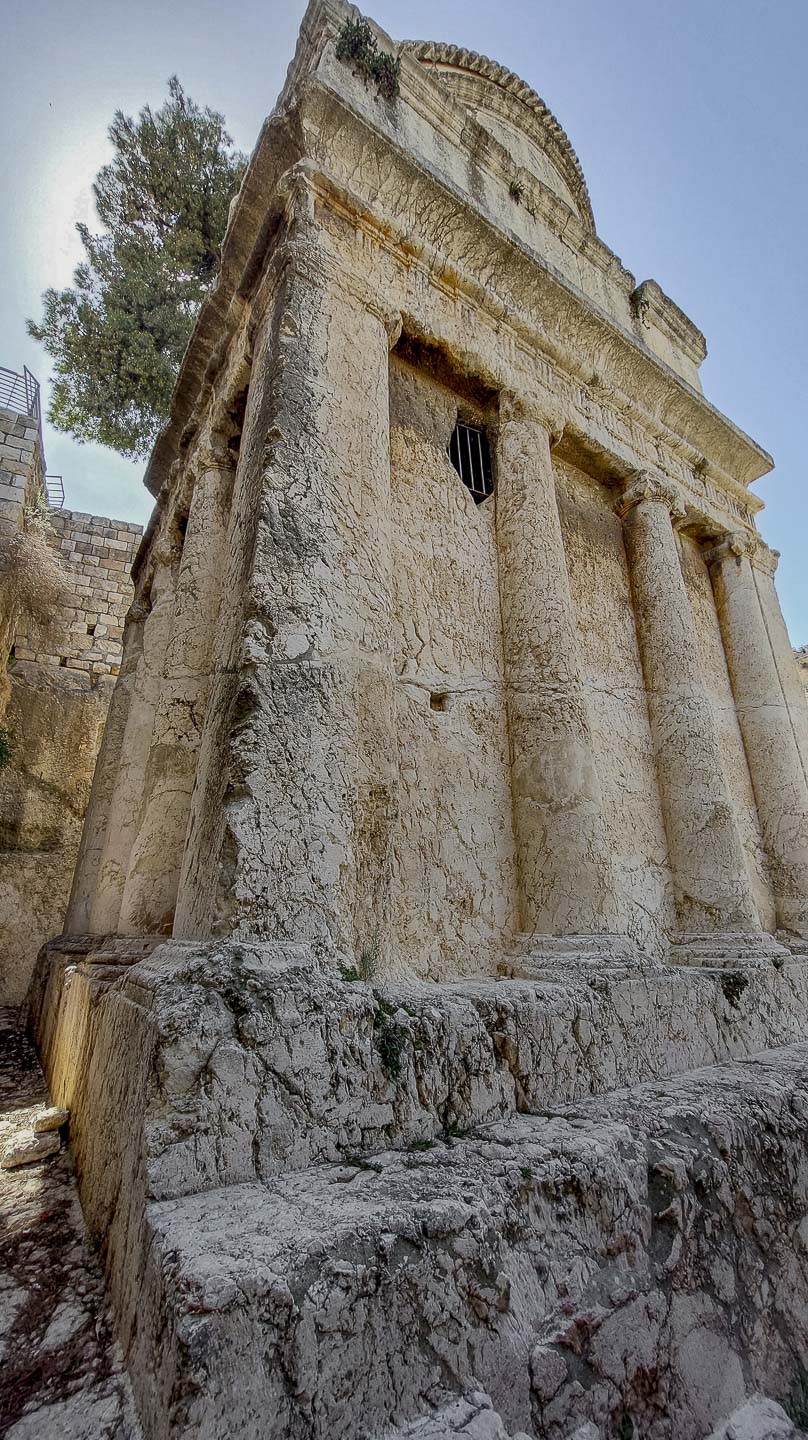
Next, we walked past the tomb of Absalom, the tomb of King Hezekiah, and the tomb of Elisha, which are located side by side along the Kidron Valley. From there, we headed straight up toward the city wall of Jerusalem.
If you'd like to get a refund for part of the amount you paid for hotels, airline tickets, or products, sign up at this link HERE—every new user receives a bonus of up to $10 in their account.


The City Walls and Gates of Jerusalem
At the time when the Jews, under the leadership of Nehemiah, built the defensive walls of Jerusalem in 52 days (a true miracle), there were eight gates in the walls. According to the Book of Nehemiah, chapter 3, they bore the following names:
1. The Sheep Gate (through which the priests brought the sacrificial animals into the Temple); 2. The Fish Gate (through which anyone who wanted to sell their catch passed); 3. The Old Gate; 4. The Valley Gate; 5. The Dump Gate; 6. The Spring Gate (leading to the Pool of Siloam); 7. The Water Gate; and 8. The Horse Gate.

Today, the gates in Jerusalem’s defensive wall are slightly different, and some have been renamed. They are as follows:
1. The Golden Gate—closed (bricked up) until the return of Jesus Christ.
2. The Sheep Gate—through which Jesus entered as the Lamb of God, taking upon Himself the sins of the world.
3. The Jaffa Gate—which leads to Tel Aviv (Jaffa).
4. The Damascus Gate—through which Saul the persecutor passed, carrying letters to arrest the Christians in Damascus.
5. The Zion Gate—leading to the Jewish Quarter.
6. The Lion’s Gate—through which Deacon Stephen was led outside the city and stoned to death.
7. The Single Gate—leading to the underground passages of the Temple Mount. It is now walled up.
8. The Hulda Gate (Gate of the Prophet Muhammad)—It is walled up, but Muslims believe that their prophet will return and enter Jerusalem through this gate. (Copy-paste of the prophecy about Jesus in the Bible)
–> Browse and book a budget hotel in Jerusalem at a discount. Check it out HERE!

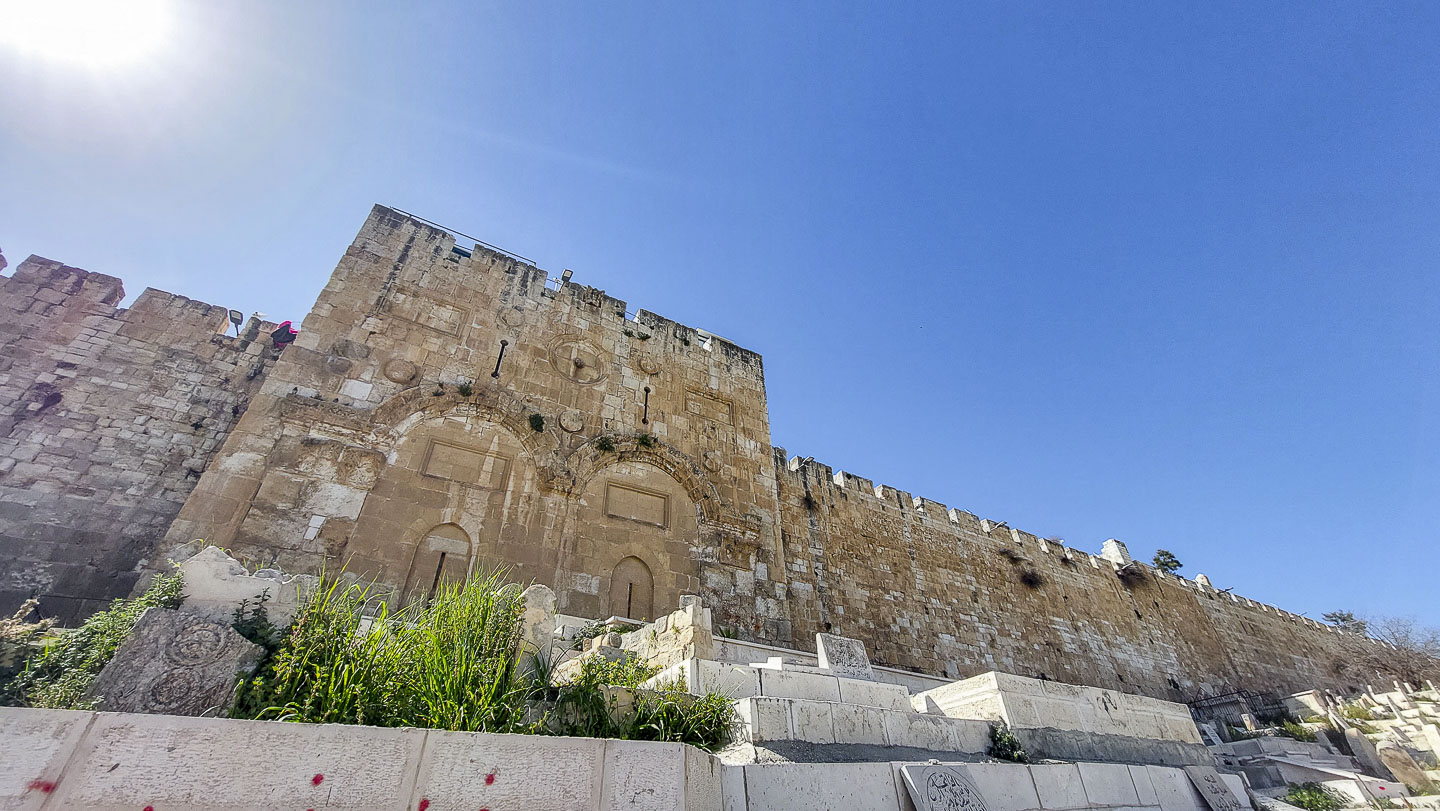
The Golden Gate (Eastern Gate)
We have arrived at the “Golden Gate”—this is the gate through which Jesus passed during His triumphal entry into Jerusalem (on Palm Sunday). The prophet Ezekiel prophesied in 570 B.C.:
“This gate shall remain closed; it shall not be opened, and no one shall enter through it, for the Lord, the God of Israel, has entered through it; therefore, it shall remain closed! But the Prince, who as Prince will sit there to eat bread before the Lord, He will enter through this gate, and He will enter by the same way.” (Ezekiel 44:2,3)
Suleiman the Magnificent heard from someone that the prophet Isa Peygamber (in Arabic: Jesus Christ) would enter through this gate, and in order to prevent Him from entering and causing the Turks to conquer Jerusalem, Suleiman ordered the Eastern Gate to be walled up, unaware that by doing so he had brought about the fulfillment of the aforementioned prophecy of God.
Hitler also had ambitions to make a triumphant entry through the Golden Gate, but he failed.
The British had planned to blast open the walled-up gate with cannon fire, but their plans were also thwarted.


Vitezda and the Underground Water Tunnels of Jerusalem
At the Baths of Vitezda, Jesus healed a man who had been ill for 38 years. This was also the place where sacrificial animals were washed before passing through the Sheep Gate to the temple. Interestingly, the water in the bathhouse came from a distance of 800 meters through an underground tunnel dug into the rocks, which was S-shaped. Construction workers began digging it from both sides during the reign of King Hezekiah. The builders digging the tunnel met somewhere in the middle, with a deviation of only 20 centimeters! Today, these underground tunnels are open to tourists, but one must be in good physical shape to crouch down, as the tunnels are low and narrow. The starting point for entering these water tunnels is the House of David.
Like my page on FACEBOOK to be the first to hear about new travel stories and great deals!


