A Travelogue on Jerusalem – Part 2
What happens on Shabbat evening at the Western Wall, how many possible sites of the Crucifixion are there, and what is the connection between King David’s Tomb and the Upper Room of Pentecost? — Read about this and other interesting facts in this second part of the travelogue on Jerusalem, part of the travelogue series “Israel—God’s Land.”
YOU CAN FIND MORE INFORMATION ABOUT ISRAEL AND A WHOLE SERIES OF TRAVELOGUES ABOUT ISRAEL HERE
TO THE PREVIOUS JOURNEY –> JERUSALEM – PART 1
WHERE IS THE HOLY SEPULCHER?
 Did you know that there are two sites believed to be the Holy Sepulcher? The more widely accepted version is the Church of the Holy Sepulcher in the center of the Old City, while the other site is the Tomb in the Garden, located outside the Old City a short distance from Damascus Gate.
The Grave in the Garden
The tomb in the garden was discovered in 1867 and consists of a small garden with a tomb dating from before the Common Era, believed to be the tomb of Joseph. Nearby is a rocky hill considered to be Golgotha, based on the fact that the hill has two indentations that resemble a skull with eyes. “Golgotha” means “skull” in Hebrew. It is known that Jesus Christ was crucified at the “Place of the Skull.”
At this spot in the garden, our entire group of travelers reflected on the sufferings of Jesus, sang a few songs, and shared the Lord’s Supper together. In addition, everyone had the opportunity to enter the tomb.
If you're wondering where to buy a souvenir, I would recommend the shop at the Tomb in the Garden or the shop on the Mount of Beatitudes near the Sea of Galilee. At the first one, I bought a Jewish calendar for next year (2024) with all the Jewish holidays marked. I also bought two leptas, just as they would have looked in Jesus’s time (from the story of Jesus about the poor widow and her two leptas). These are much more valuable items compared to the souvenir shops in the bazaar in the center of the Old City, for example.


The Church of the Resurrection of Christ

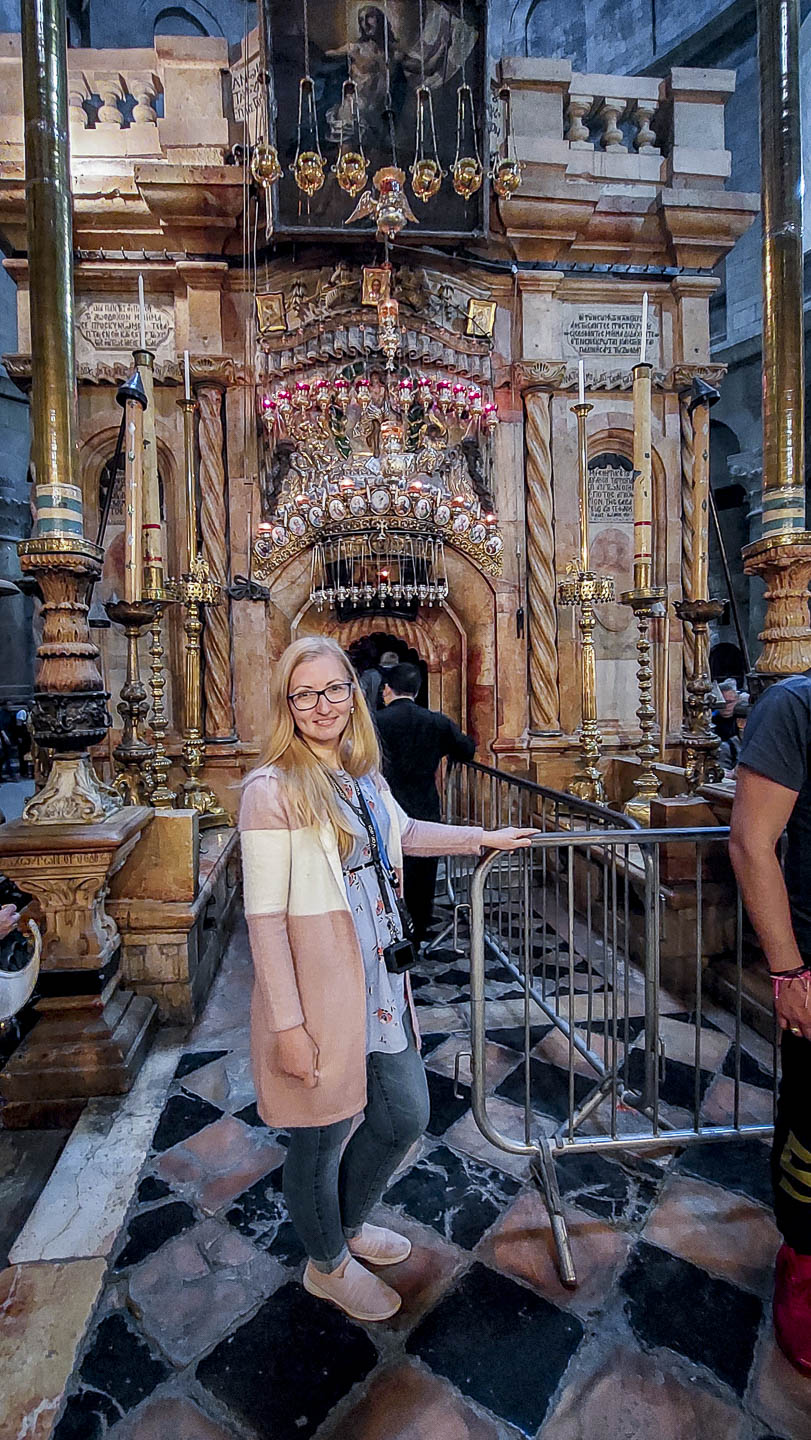 It was built by Emperor Constantine and his mother in the first half of the 4th century. Today, administration of the church itself is shared among the Greek Orthodox, Roman Catholic, and Armenian churches, which are in constant conflict with one another. According to some researchers, this is precisely why the key to the church is held by the Muslim Nusseibeh family, which was entrusted with this responsibility as early as 637 AD by Caliph Umar. Every night, as darkness falls over Jerusalem, Adib makes his way along the cobblestone, narrow streets toward the Church of the Holy Sepulcher to lock the church and keep the key until dawn. At dawn, around 3:30 a.m., he returns to the church’s wooden gate and hands the key to another Muslim—Wadij Nuseibeh, who serves as the church’s gatekeeper.
Every day, there is a huge crowd of pilgrims at the entrance to the Church of the Holy Sepulcher. On my previous visit to Jerusalem, I didn’t go inside the Holy Sepulcher itself, which is located within the church, but I told myself that this time I wouldn’t miss it. There was a long line, but not as long as the one at the Church of the Nativity two days earlier. We had to wait an hour and a half to get inside, during which time we watched a Latin Mass celebrated by Catholic monks. Finally, we entered the tomb—the place where the Holy Fire descends. Well, honestly, I didn’t feel anything. I didn’t experience anything. Conclusion: it wasn’t worth the wait. Plain and simple.
–> Browse and book a budget hotel in Jerusalem at a discount. Check it out HERE!


THE MARKET
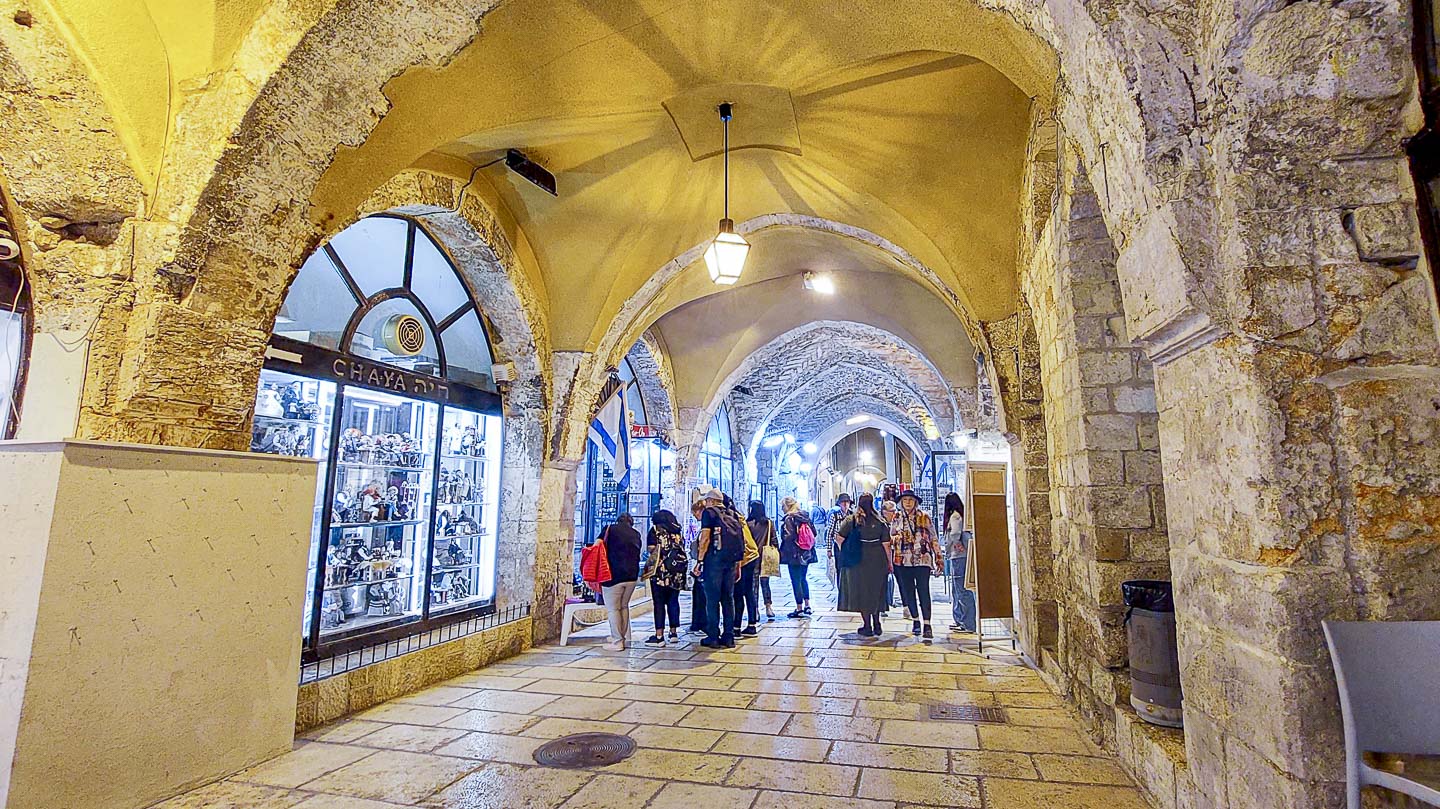
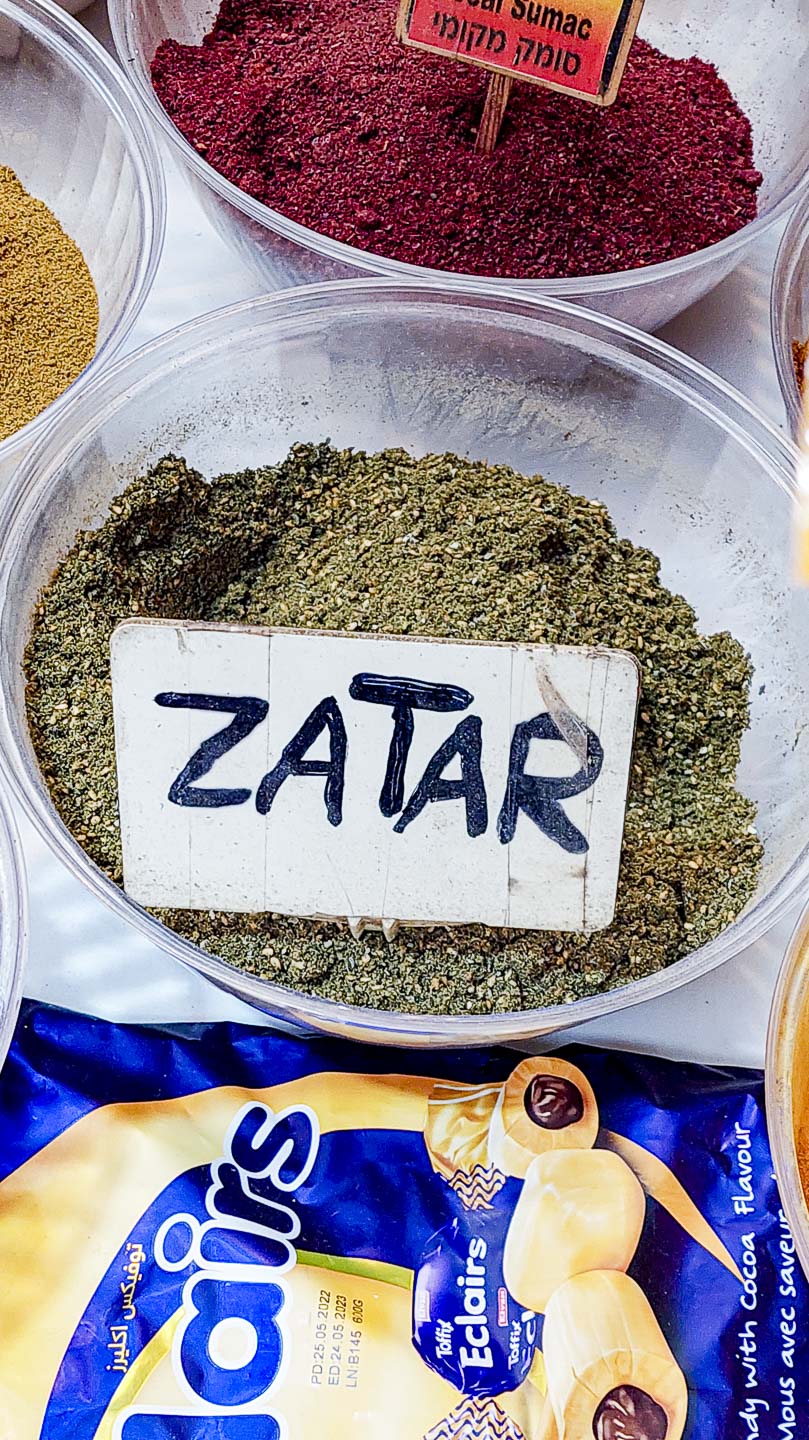
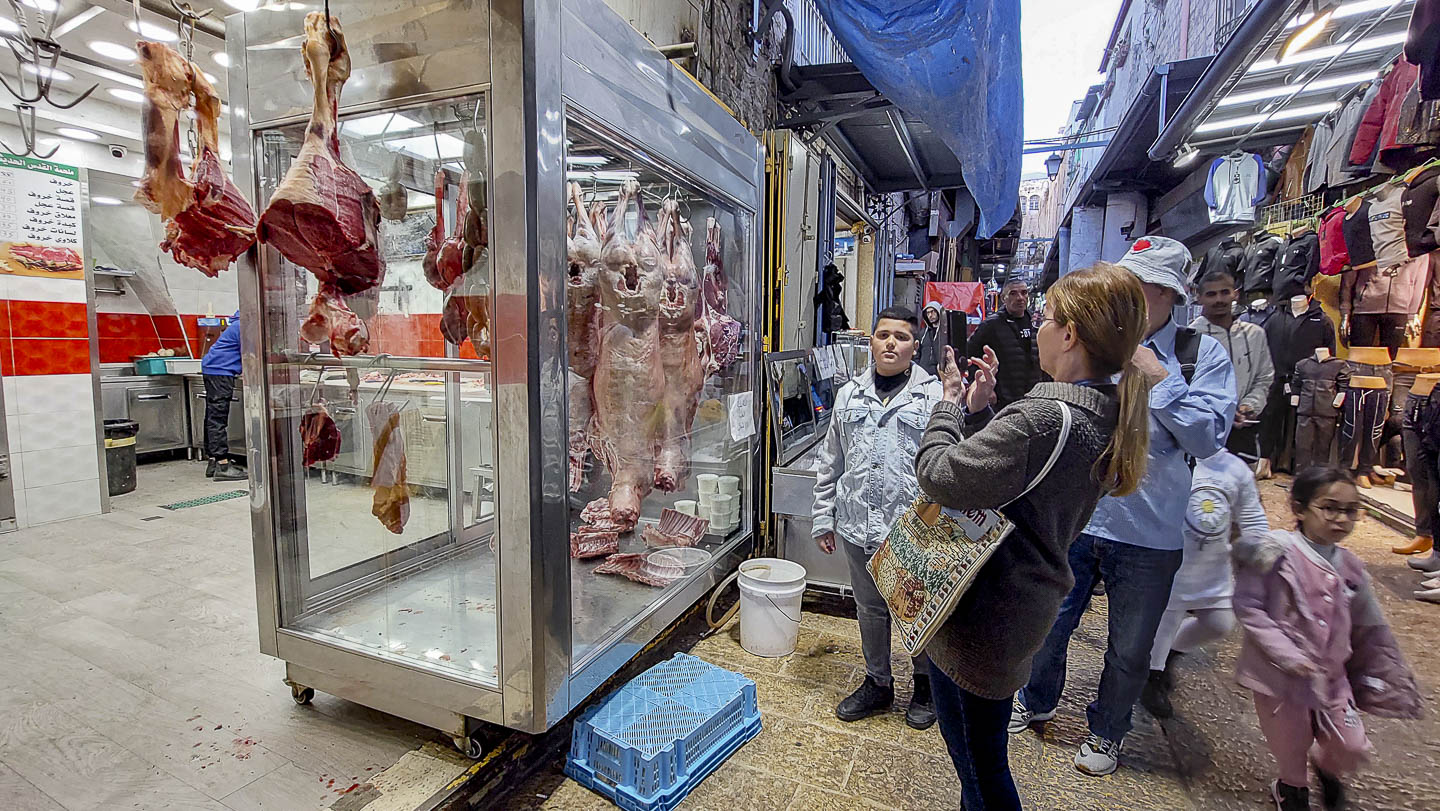
Today, vendors in Israel—mostly Palestinians—offer bottles of “holy water” from the Jordan River, “sacred” sand from the desert where Jesus was tempted by the devil, and many other “holy” items to unsuspecting pilgrims. The stalls are overflowing with spices, scarves, dates, halva, clothes, shoes, and just about everything else. The prices are good, but they get even better after some haggling. As a rule, when you start bargaining, you should initially offer a price less than half of what the seller is asking, and then meet somewhere in the middle. The bazaar divides the Old City almost in half; as you approach the Jewish Quarter, the appearance of the shops and the goods on offer begin to change noticeably. In the Jewish Quarter, there’s an abundance of beautiful paintings with biblical and typically Jewish themes, as well as the Jewish menorah, all kinds of items featuring the Star of David, and much more.







THE CITY OF DAVID
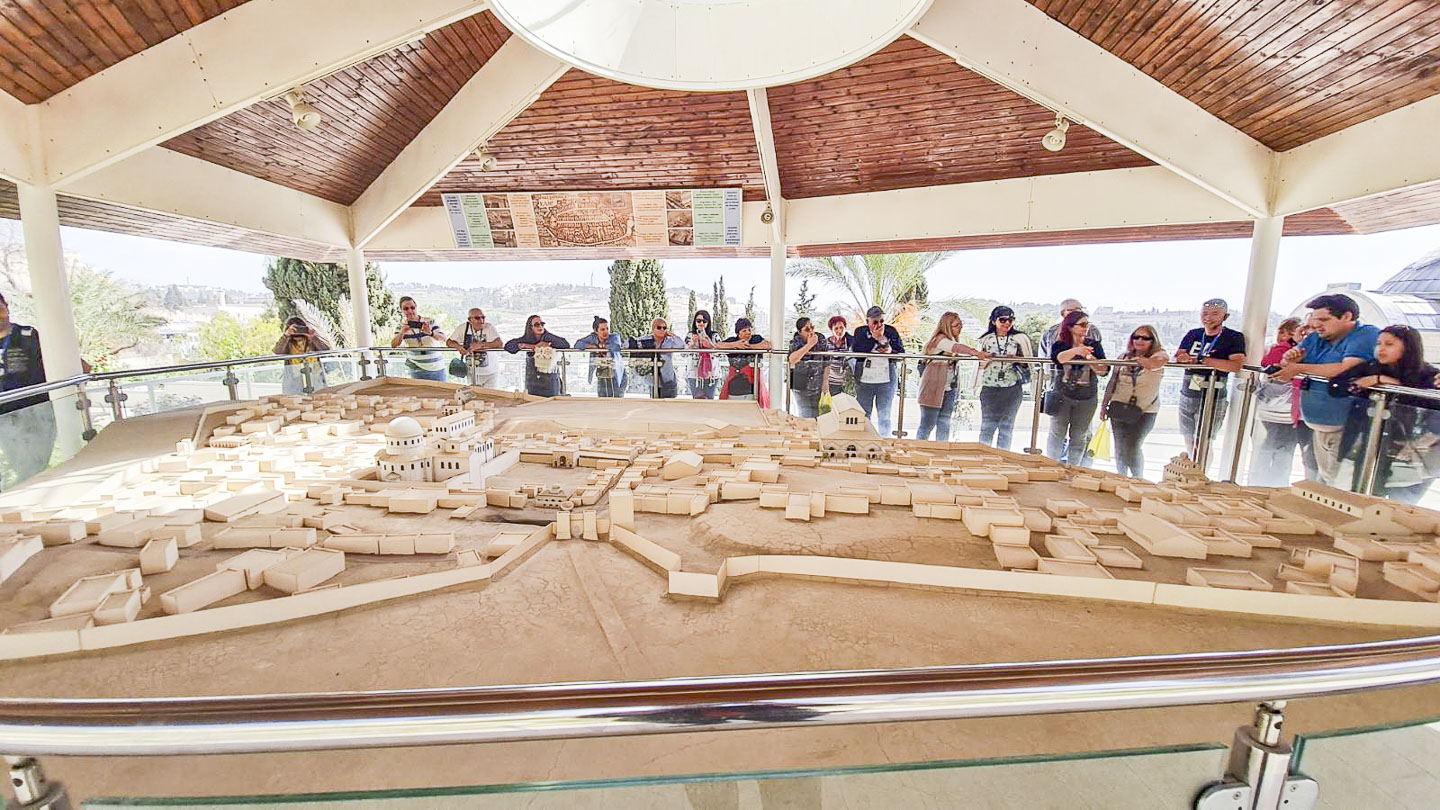
The area around the so-called City of David is believed to be the oldest part of the city and is located on a hill south of Temple Mount in the predominantly Palestinian neighborhood of Silwan in East Jerusalem. It is located outside the walls of the Old City. The Gihon Spring flows past the City of David and is connected via water tunnels to the Pool of Siloam. Fun fact! The Gihon River is one of the four rivers flowing from the Garden of Eden.
This was where we stopped to rest and have lunch before continuing on to the next sights. Thank you for your hospitality, King David!
It is believed that it was here, from the roof of his house, that David saw Bathsheba and committed adultery with her. It was also from here that Michal (David’s wife) mocked David for dancing nearly naked in front of the entire people. It is believed that this is also likely the site of Abraham’s encounter with Melchizedek.


MORE ATTRACTIONS
During the two days we spent exploring Jerusalem, we also visited the following sights:
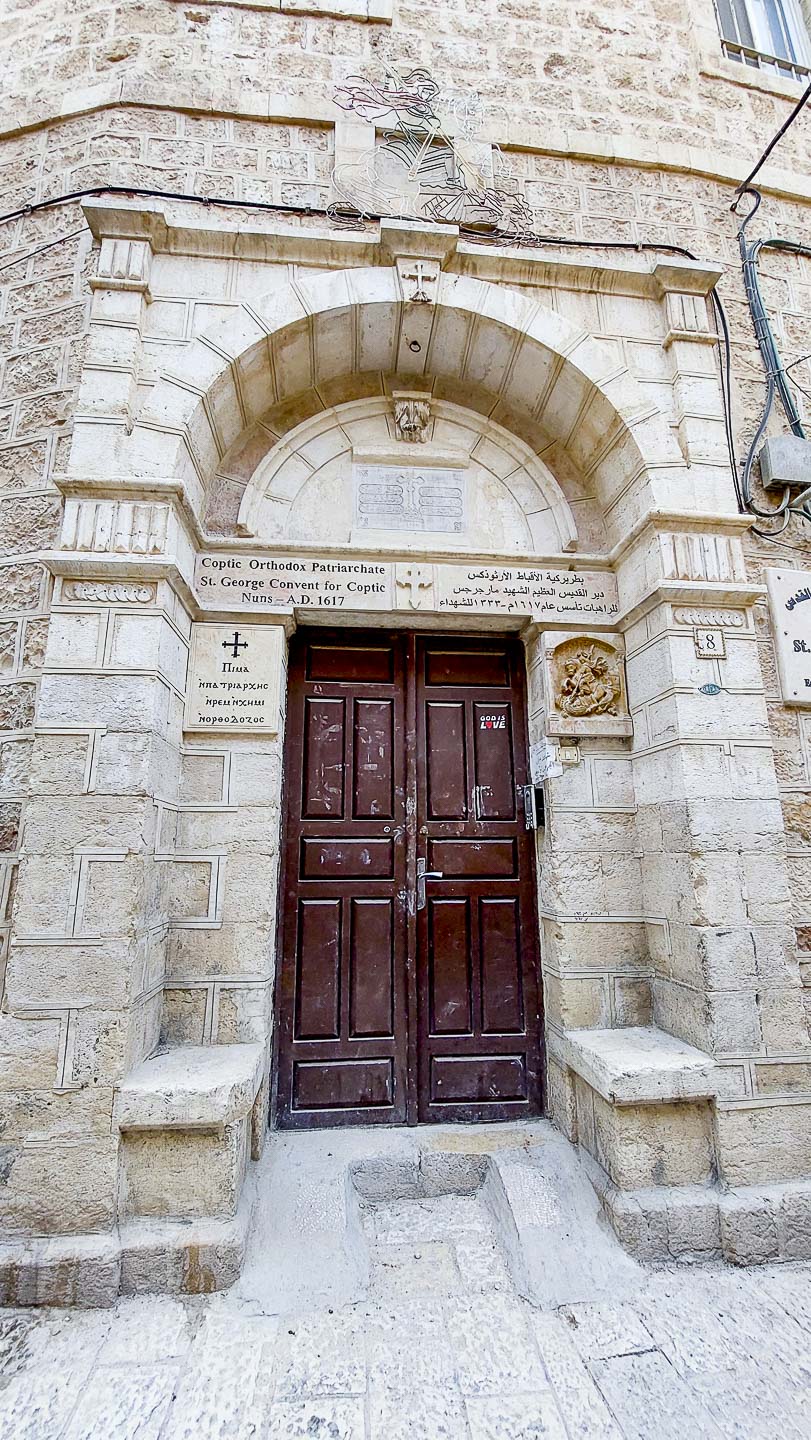
– the prison where Jesus and Barabbas were held on the night before the Crucifixion
– the prison where the Apostle Peter was held and from which an angel of the Lord miraculously freed him (south of the Old City walls)
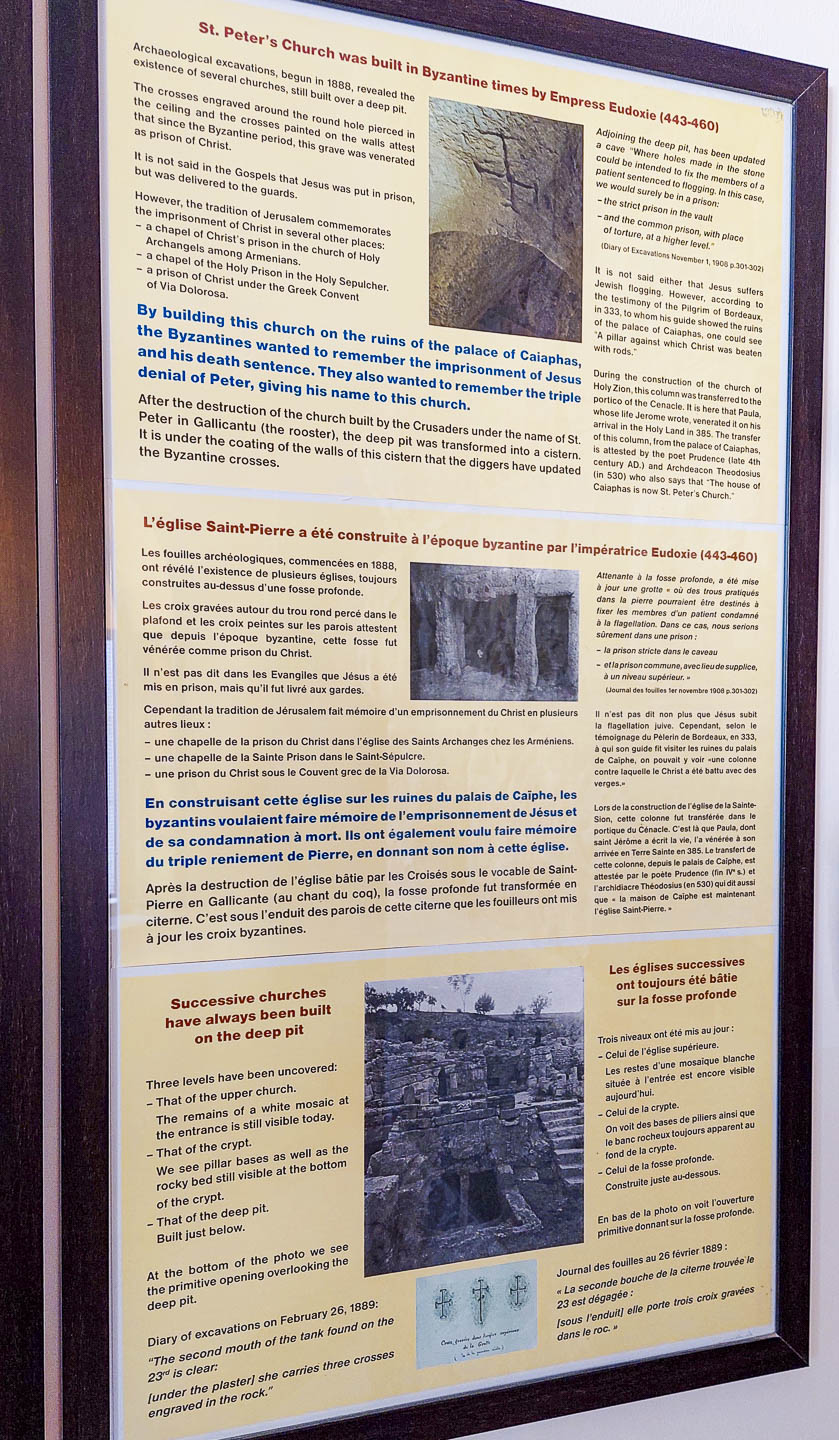
– Caiaphas’s house and the square where Peter denied Christ three times (south of the Old City walls)
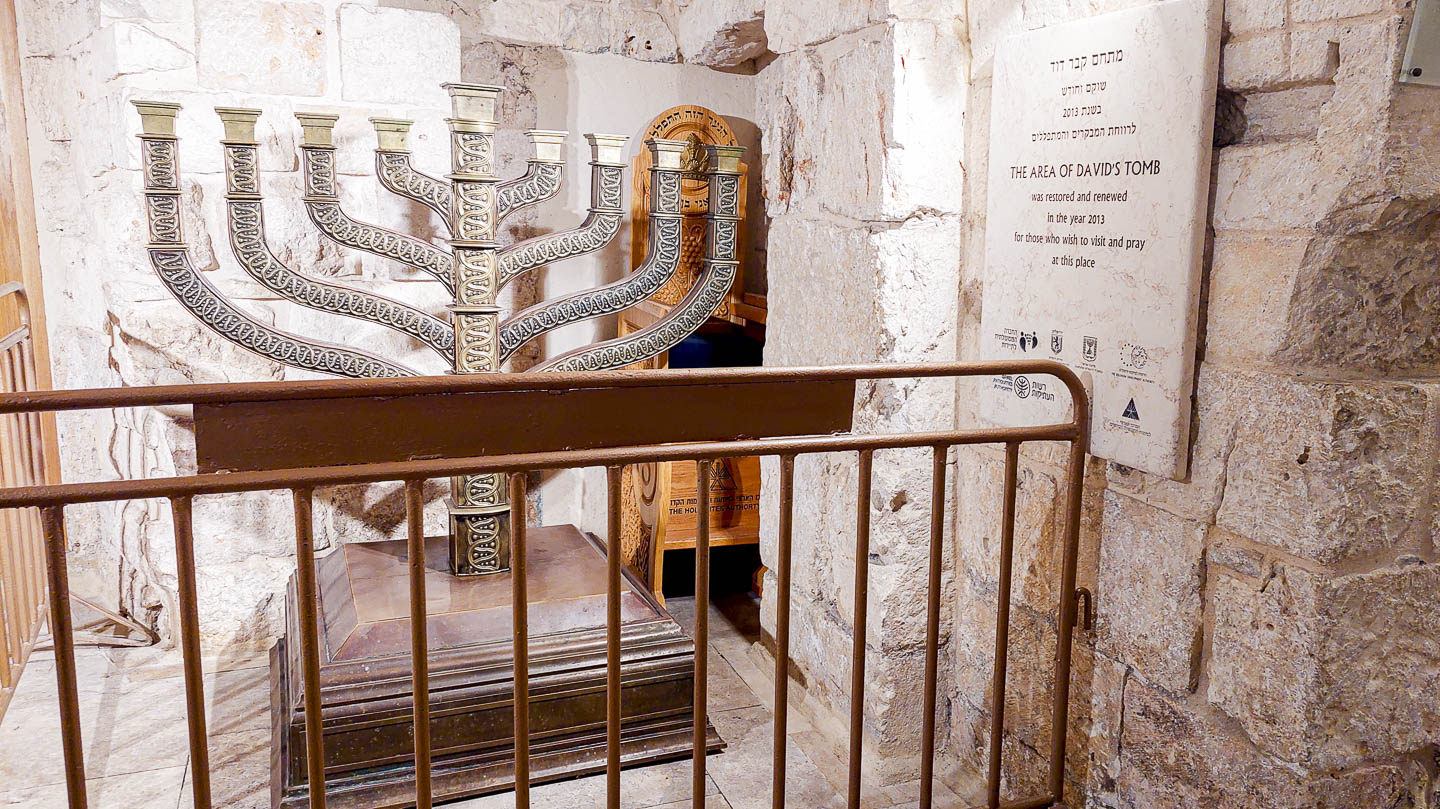
– the site (the Upper Room) where Pentecost (the outpouring of the Holy Spirit) took place is located directly ABOVE David’s Tomb (which only men were permitted to visit)
– a panoramic terrace overlooking the Valley of Enom (Gehenna) and the Field of Blood, where Judas Iscariot likely committed suicide by hanging himself from a tree
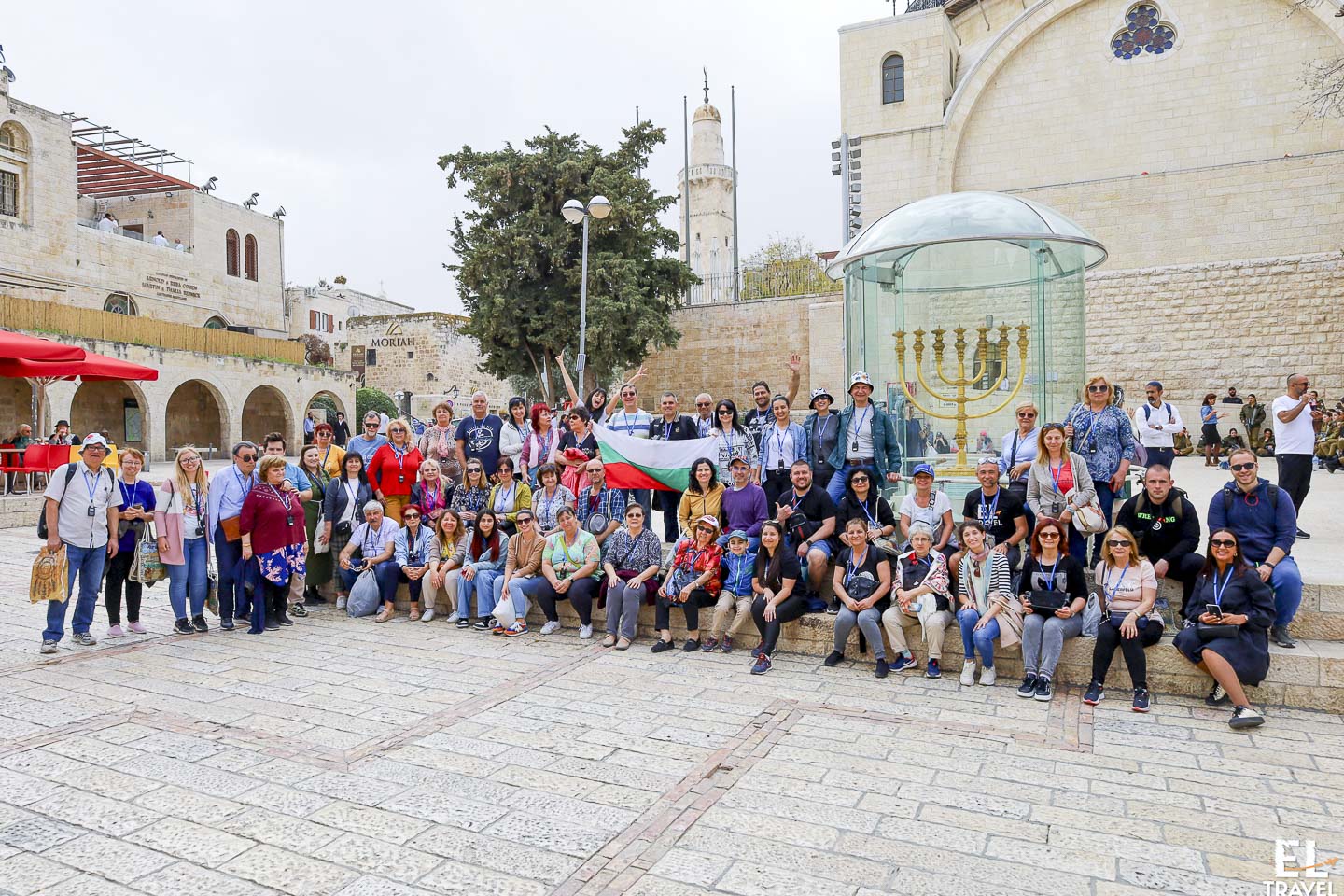
– Menorah Square in the Jewish Quarter of the Old City—a place for gatherings, coffee, and music
If you also want to get back a portion of what you spent on hotels, flights, or products, register at this link HERE and every new user receives up to a $10 bonus in their account.








THE WESTERN WALL - THE WALL OF TEARS
In order to build a massive temple, considerably larger than the previous one (and even than the hill itself), Herod the Great expanded the hill with massive sloping retaining walls, and the area was filled with stones and earth. An area measuring 450 × 300 meters was leveled and enclosed by a wall of massive stone blocks 1 meter high and 5 meters long. It is precisely the Western retaining wall (facing the temple courtyard) that is one of the few surviving ruins following the city’s destruction in 70 CE, known as the Western Wall. It is not part of the temple walls themselves. In one of the streets near the Temple, there was a structure with a glass cover, illuminated all the way to the bottom, through which one could see an original stone column from Solomon’s First Temple, extending 10–20 meters deep.
Jesus had prophesied the destruction of the temple. Months earlier, Christ’s disciples had left Jerusalem, fleeing into the mountains. But many of those who had rejected Him, shouting, “Crucify Him! May His blood be on us and on our children!” perished during the siege of Jerusalem by Titus’s Roman forces. Despite fierce resistance from the Jews, the city was captured in A.D. 70. Those who tried to escape at night were captured by the Romans and crucified.
The Jewish historian Josephus, in his book *The Jewish War*, describes as an eyewitness how a forest of crosses rose up around Jerusalem. The trees within a 40-kilometer radius had been cut down, and there were no longer enough to meet the demand. The total number of captives taken and crucified during the entire war was 97,000, and the number of people who died at the end of the siege of Jerusalem was 1,100,000. That is a horrifying figure!

Like my page on FACEBOOK to be the first to hear about new travel stories and great deals!






SHABBAT – FRIDAY EVENING AFTER SUNSET
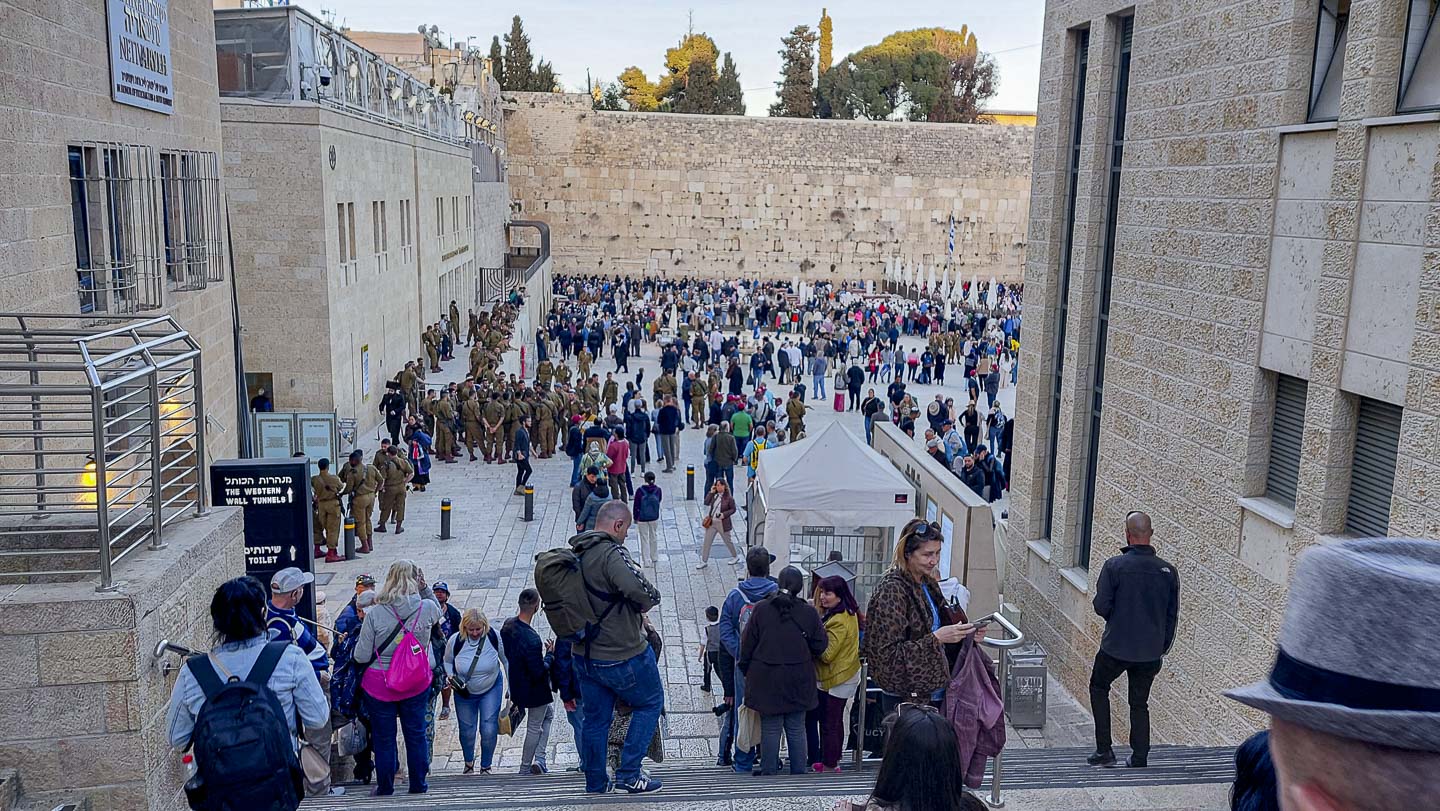
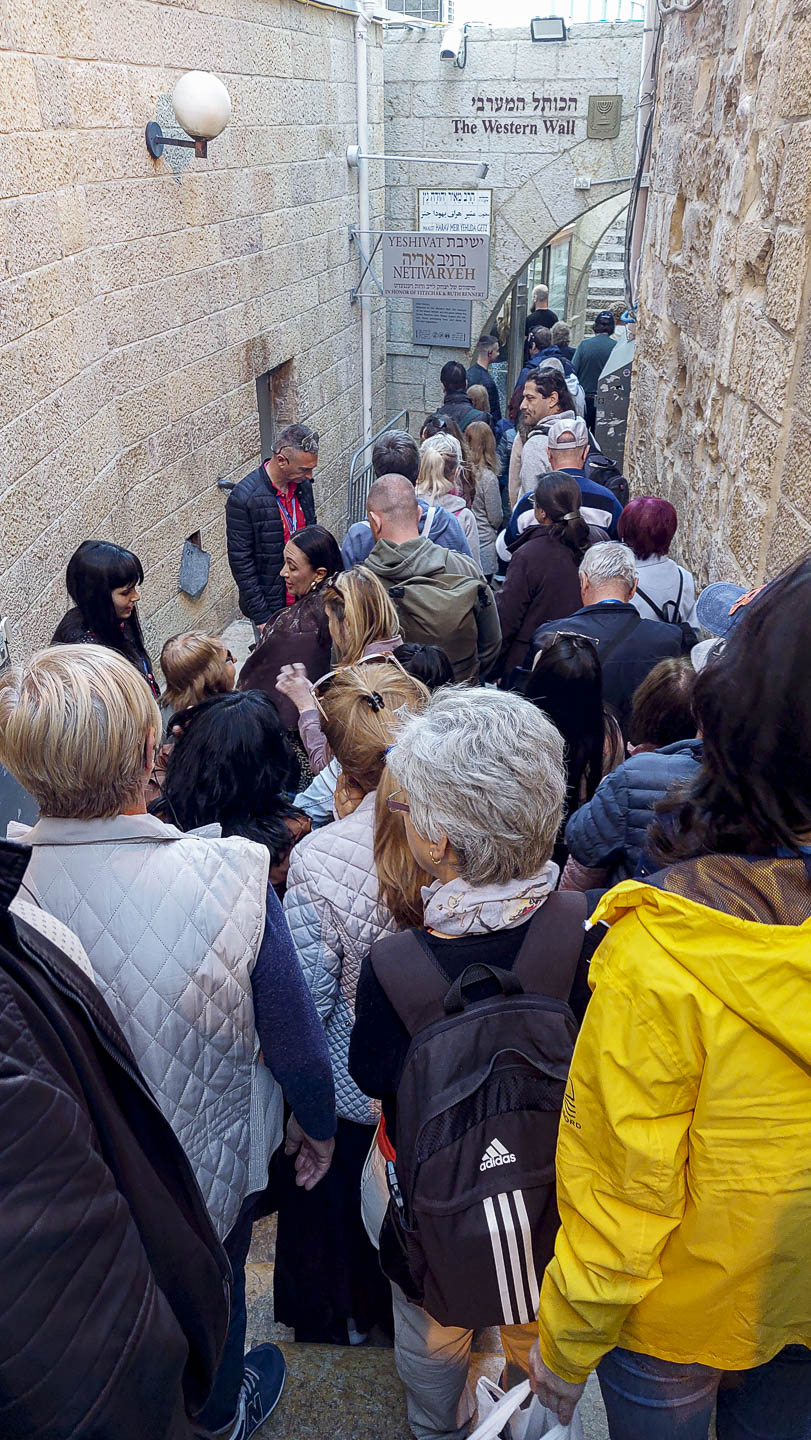
We visited the Western Wall on Friday evening right after sunset, when Shabbat—the Jewish Sabbath—begins. By that time, everything in the Jewish quarter of Jerusalem has already come to a halt; the shops and cafes are closed, and the area around the Western Wall becomes a sort of hub for merriment and celebration. The square was already filled with beautifully dressed Orthodox men and women. Tourists are also welcome to go and pray, as long as they are dressed modestly, and men must wear a small skullcap—a kippah—on their heads. Men pray separately from women, together with their sons, teaching them how to pray from a young age. Mothers, in the same way, bring their daughters with them. The entire area in front of the Wall is divided into men’s and women’s sections.
As time went on, the sound of prayers and songs grew louder. The mood lifted, and some of the men began tapping their feet in time to the music on the tables. The women, meanwhile, began dancing in a circle, performing Jewish folk dances. Where, if not here? When, if not now? Together with a few other Bulgarian women from the group, we went over to join the Jewish circle dance. The excitement was phenomenal! So much zest for life and so much joy poured out of the Jewish songs.
I was curious to know what the Jews were reading from those little books they were holding in their hands. I slowly and carefully approached a young woman and asked her, and she replied that they were reading Psalms 92–99. Every Friday.


Holy Saturday
According to the official Jewish calendar, the day begins at sunset and ends at sunset the following day. Thus, the Sabbath (the Jewish holy day) actually begins on Friday evening and continues until Saturday evening. On this day, Jews are not supposed to work, study, cook, clean, or do any number of other things.
The distance for a Saturday walk was measured as the distance from the Mount of Olives to the Temple Mount, which, realistically speaking, is a very short distance.
In their fanatical efforts to observe the Law, Jews have gone so far as to invent “Shabbat elevators,” where on the Sabbath you don’t press the elevator button—the elevator stops at every floor on its own, because apparently pressing the button is considered work…
Likewise, if they haven’t turned on the light at home in advance on Friday evening before going to pray at the Western Wall, then when they return, they’ll be left in the dark, because turning on the light is again considered work. They can’t even light a candle… Unless they ask a tourist to help them.
–> Browse and book a budget hotel in Jerusalem at a discount. Check it out HERE!



Hats
A little about the attire of Orthodox Jews. It turns out that the hat says a lot about a Jew’s status. The larger the hat you wear, the higher your rank as a rabbi. These voluminous, heavy hats cost several thousand dollars, and Jews take great care to protect them from rain, dust, and other elements. There are also hats that, when worn, help you isolate yourself from those around you so you can pray with greater focus. The small, unassuming caps that every Jew—whether a child or a tourist—wears are called kippahs, and they are worn at all times for the sole purpose of reminding men that there is always Someone above.
On the other hand, the women always have beautifully arranged scarves in their hair; most of them wear long dresses or skirts and have on ballet flats.
You can see Jews dressed like this mainly in Jerusalem and much less frequently in other parts of Israel, where people are not as traditionally religious.